In Light Of- : Q&A with Emily Fussner

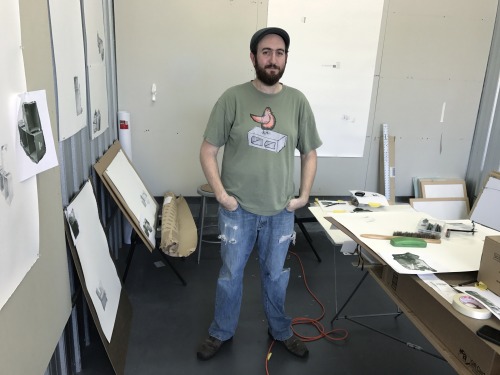
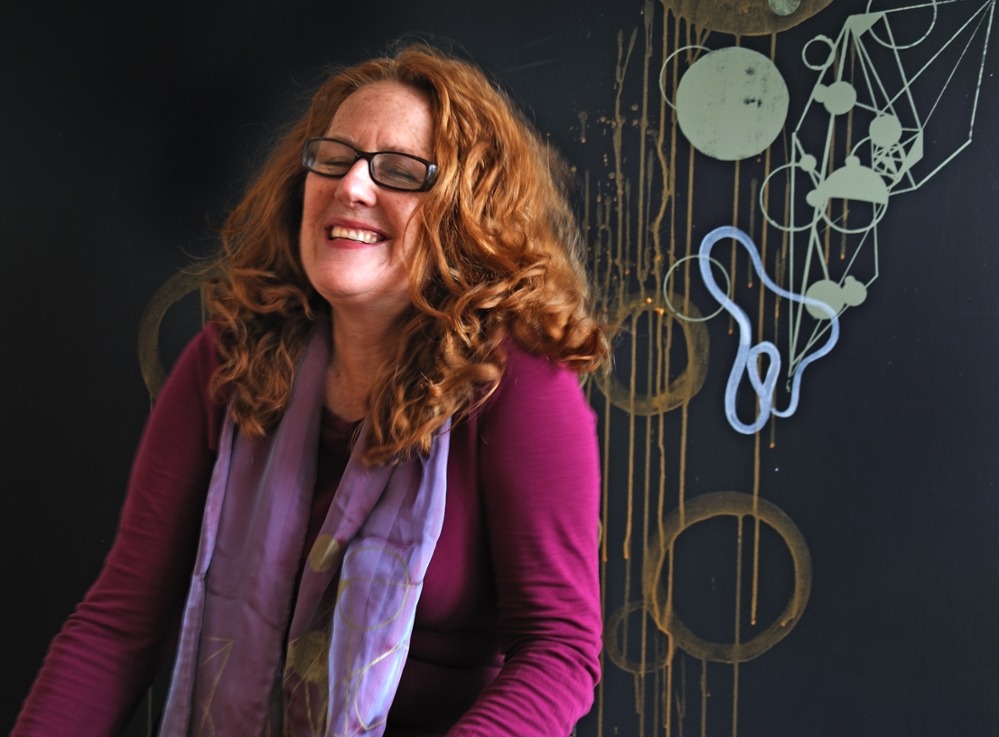
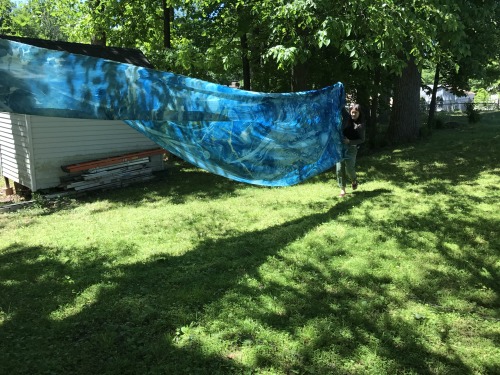
Emily Fussner (b. 1991, Indonesia) is an artist based in Northern Virginia. She holds a BS in Printmaking from Indiana Wesleyan University (2013) and an MFA in Visual Arts from George Mason University (2019). Studying abroad with Gordon College in Orvieto, Italy, and with American University’s MFA Studio Berlin residency program also influenced her greatly. Fussner has professional experience in graphic design, teaching printmaking and papermaking, and arts administration. In the past she worked for the Joan Hisaoka Healing Arts Gallery in Washington, DC, and most recently curated exhibitions as the Graduate Professional Assistant for Fenwick Gallery at George Mason University.

In Light Of- was on view at Hillyer on August 2 – September 1, 2019.


What first intrigued and attracted you to the mundane spaces that most people over look?

That is a good question! It’s hard to say what was the first intrigue, or if I can remember. But I do know that my semester abroad in Italy with Gordon College, my second year of undergrad, is where I learned to take seeing more seriously. It was the first time I was living abroad without my family, and there was so much to take in. It was unlike any place I had ever been: the textures, the light, the architecture. Our drawing professor read to us from architect Juhani Pallasmaa’s Eyes of the Skin, and I held on to the quote, “Focused vision confronts us with the world, whereas peripheral vision envelops us in the flesh of the world.” I’ve always had an eye for detail, but this helped me begin to consider my environment differently. When I returned to the US, I wanted to continue paying attention and seeing with a sense of wonder. And a lot of life happens in mundane spaces and in transit between places.


In your work scale seems to be a major component. How do you decide the size of a piece, whether it will be a large scale installation or an intimate book? How do you connect the two together?

Scale is important to my work, and I explore it in different ways, whether it is a large installation, the intimate size of a book, or the one-to-one scale produced by tracing or casting (as in my practice of casting cracks, not present in the current exhibition though referenced). With a background in printmaking, I often work in multiples, which allows scale to expand through quantity.

I’m drawn to architecture and spaces where I become very aware of human scale and movement. In my photographs of cast light, I try to include at least some small element of furniture or architecture that gives a sense of place and scale. Within the gallery, working in an installation format or larger scale creates another sense of space. We approach the work differently, and I like that physical interaction, the possible walking under or over or into the work. In both a similar and very different way, books gather, condense, and unfold space. There is a pace and sequence of information the viewer takes in, and a movement through the work. I’m a very tactile person and I love when it is possible to touch an artwork–so I also appreciate the connection books create, since they are meant to be touched and held.

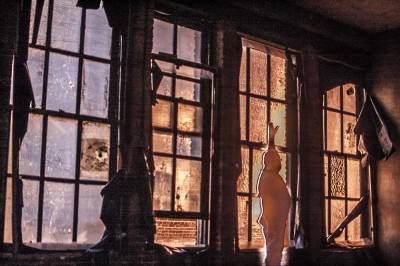
I find that each piece tends to know what it wants to be, and sometimes the scale isn’t a very conscious decision. Other times, experimenting in the studio helps determine that outcome. For example, “Threshold” is a variation of an idea I’ve had for awhile. I first started working in cut-outs of various reflective and translucent materials on a much smaller scale in Berlin last summer, at GlogauAIR with American University’s MFA summer abroad program. Those cut shape and light compositions were small, on shelves, and though the size worked and drew viewers in, I knew I wanted to try that on a larger scale. I wanted to be able to walk into it—which is possible with “Threshold” although it requires care and for some may feel a bit close.


Why do you like working with paper as a medium?

Papermaking is a very haptic process. You measure a lot by touch: the consistency of the pulp fiber, how thick or thin the concentration of pulp feels in the vat. The general process of making paper requires breaking down a base fiber and literally beating it to a pulp. The breaking down, beating, pressing, transforms the fiber into a new material; the structure and strength is formed by the interlacing of the fibers. It is a very physical, methodical process that allows time to think or not think. At some point I thought about it on a metaphorical level, relating to my own experience with the brittle bone condition, Osteogenesis Imperfecta (OI), of breaking and re-building, of strength formed through interdependence rather than independence. Perhaps for similar reasons, I like working with fibers like abaca, flax, or kozo–they can be formed to make very delicate, thin, translucent paper, and yet they are surprisingly strong and resilient. Whether I make the paper or not, I also like using thing sheets as they transmit light well.


How has the bone condition, Osteogenesis Imperfecta impacted your work?

OI has influenced so much of my development, my way of seeing and moving. I mean, I’m smaller, closer to the ground. I try to notice the ground as to watch my step and prevent falls, and I think that’s probably how I began noticing the patterns of cobblestones or cracks. My day-to-day life is fairly “normal,” but holds an underlying tension that I’m still fragile enough that a simple action gone wrong can have significant consequences. I’ve found that even when I’m not making the work specifically about this, that the materials I use (even aside from the paper mentioned before) tend to inhabit this tension between what is fragile and strong, what might seem to be strong but is actually brittle, and vice versa. Similarly, when I discovered Kinstugi (the Japanese art repairing broken ceramics with gold lacquer, highlighting the brokenness and repair), it resonated with me on an embodied level, and I became interested in exploring that concept through my own methods and approach to place and the body.


What do you hope the audience achieves by interacting with your installation at IA&A at Hillyer?

I hope In Light Of– creates a peaceful, still space for viewers, an encounter where one can slow down, look closely, and reflect. I hope it helps people ask new questions and see their usual surroundings in a new light.


You have been living overseas for large segments of your life. How have the places you’ve lived impacted your art?

I’m so thankful for the opportunity to grow up in several countries–it shaped my worldview in unique and I think helpful ways, taught me to consider different perspectives. I was five years old when my family moved back to the US from Indonesia, and then I was 13 when we moved to New Zealand and 18 when we left. Adjusting to different cultures and places required a lot of observing. And as each context was so different and far away from the other, I think it taught me to connect to place deeply. Responding directly to place is a key component of my artwork. When I lived in Italy, for the second time, after college, is when I first began casting crevices in the ground with paper pulp; and during my six weeks in Berlin was when I started more intentionally working with cut-shape light and shadow sculptures—so the time in those places has more directly influenced my current work.


Plainclothes Agenda: Q&A with Christopher Kojzar

Christopher Kojzar received a B.A. in International Affairs from George Washington University and an MFA in Intermedia and Digital Arts from the University of Maryland Baltimore County. A list of his residencies include the Creative Alliance in Baltimore, Crosstown Arts in Memphis, the Seventh Wave Residency in Rhinebeck, NY, and the Truth and Reconciliation Residency at the Santa Fe Art Institute. 

Plainclothes Agenda was on view at Hillyer on August 2 – September 1, 2019.


What have you gained as an artist from each of your residencies?

When I do a residency I am quite aware that I am taking a risk, in a very paradoxical sense, to give up financial opportunities in order to develop my career as a professional artist. Most residencies are unpaid and even less give the artist the financial freedom to take an extended leave of absence from their home base. I am eager to do residencies because it promotes my vision for the arts outside of the MD/DC area. I get the opportunity to associate with like-minded peers who share a similar intent to use the arts as an engine for societal change. It is a habit of mine to build up a network with other professionals in order to spark dialogue, collaborate on projects, and actively promote not only myself but others as thought partners who share values of social justice, inclusiveness, and dynamic community involvement. I’ve been fortunate to get residencies that do offer some financial support, but more importantly, I get to experience making art in a completely different setting and be exposed to people who have completely different perspectives than I am normally accustomed to.


Why are you interested in public spaces? What drew you to the themes of observation and interaction?

On my part, the interactions in public are unsolicited and I dig into the “passer-by curiosity.” I want to provoke viewers into considering my interpretation of observation and encourage them to incorporate an “art of seeing” into their daily lives. We must, I contend, metaphorically stop, smell, see, absorb, and take note of the world, even if it causes us trouble. I create art from engagements because I notice how my body is marked and that others scrutinize my actions as an artist. If I take on drawing in a public space, I am inviting an interaction based on the assumption that the act requires attention. What’s more is that it also requires a commitment on my part to appear idle and expect interaction based on another’s assumption that I am behaving outside “the norm.”

As recently as May of 2017, Mannie Garcia, a freelance photographer in Wheaton, Maryland settled a seven year case where he was arrested for taking photographs of officers arresting two Hispanic men. Mr. Garcia felt that he had to make a case for our First and Fourth Amendment Rights regardless of the damage the incident inflicted upon his professional career. I do not believe that my First or Fourth Amendment Rights have been violated, but I am seeking to expose the vulnerability of these rights under the work that I do. Also, what is particularly unnerving is that as much fun as it is to show the farce of concern drawing in public elicits from authority, there is a point where being a black man who looks like a threat can pose serious consequences. When I choose to engage others, my anxiety is particularly acute because it relates to my race and gender. There is a certain amount of anxiety when I wear a body camera that can be mistaken for a bomb. Even my looks can be misread as suspicious. I am squinting, taking notes, and I seem intent on examining the world around me.

In regards to drawing as a performance art, I didn’t consider the work to be performance, or even activism until months after I documented my experience at the Oculus Hub and started a dialogue with Clark Stoekley. Stoekley made a name for himself by confusing law enforcement into believing that he was associated with Wikileaks during the Occupy Wall Street Movement in New York City. From our conversation, it became quite clear that I was performing and occupying spaces in a political context. Clark addresses the idea of art activism to signal a blend of satirical art and activism. It’s a method of improvisation and chance encounters with authority that defines the type of performance that he does, and I tend to align myself in a similar vein.

Further research also led me to Adrian Piper’s “Mythic Being” series where she dresses and plays the part of a black man with an afro walking the streets of New York. As a bi-racial artist, Piper uses her own body to insist upon the entrenchment of racism in American society, yet intellectualizes the experience after the act of the performance is carried out. The photo-documentation of “Mythic Being” is coupled with her writings and became particularly important to me because she’s developing a narrative for the performance. I consider my performance as non-performance and I contemplate the interaction after I play out the act. Piper also expands on how she disembodies herself to perform the role as “it becomes an object for me to contemplate, and simultaneously loses its status as element in my own personality or subject hood…‘The experience Mythic Being’ thus becomes part of public history, and is no longer a part of my own.” When I take on the act of drawing, it is to signal how certain types of behavior provoke an authoritative response. The performance lends to a much larger dialogue about the observational gaze and how surveillance can be traced to stereotypes or unconventional forms of expression in public space.


Why have you chosen to work with both digital mediums and traditional fine art mediums, such as drawing?

Whether I work with digital or traditional fine arts mediums, I am utilizing different toolsets to create conceptual art. Our minds should constantly be learning new tasks; when I started my graduate studies in Intermedia and Digital Art, I had to put my love of drawing and painting on hold in order to gain skills in videography, virtual reality, and first-hand research. My intention for drawing changed after I acquired new tool sets. Even though I draw for fun, I’m thinking about what it looks like to the outside observer. Digital mediums help me convey this idea. All artists nowadays incorporate several different mediums to get their point across or develop final iterations of their work. The digital mediums streamline the process. When I go out in public with the intent to create art for ‘Plainclothes Agenda’, I photograph, record audio, and write poetry so that I can document my surroundings. Even though the smartphone has drastically changed the way pedestrians navigate and observe their surroundings, I try not to belittle the importance of carrying what I consider to be a digital sketchbook. The drawing is artifact, its expression, the digital processes are refinement tools, challenging the mind to better understand the freedom I have to produce a clear message.


You use interactions with strangers and public spaces in your art. How do you decide where to work and who to talk to? Do you ever return to the same public spaces or seek out any specific individuals?

I first went to the Capitol Building to draw a quick sketch of the South Entrance and then into the Rayburn Offices to document interns working for House Representatives in Washington DC; I also sketched at places like casinos, airports, car repair shops, DMVs, shopping centers, and subway stations, visually discerning the balance between work and leisure. I made Baltimore, Manhattan, Mississippi, Santa Fe, Honolulu, Memphis, Washington DC, Karlovy Vary, Amsterdam, and Paris my testing grounds. In Paris, I chose Republic Square as documenting grounds because it holds as much significance as DC’s mall for both leisure activity and expression of free speech. It was the first location that I went to multiple times to draw. I also coordinated a drawing workshop with other artists from The Agency of Artists in Exile and asked them to willingly participate in conversation if anyone approached them. Nine times out of ten, someone approaches the artist rather than the other way around, and in my experience, I rarely talk to the same person twice.

The relationship of work to leisure and to the perception of idleness seeps into my identity as an artist. To me, even though there is a great deal of pleasure in making art, I consider a lot of my undertakings outside of the studio as work, mainly because I am employing the act of drawing to bring an awareness to the subject of observing in public. The drawings are an artifact or evidence to the interactions I seek out while I perform as a man who draws at leisure.


What was your inspiration behind “Plainclothes Agenda”? How do you see the article interacting and blending with the artwork in your exhibit?

“Plainclothes Agenda” was my graduate thesis at University of Maryland, Baltimore County, and Seventh Wave Magazine published a truncated version of it in 2018. This project is coming up on its third year, and is rooted in a privilege of engaging with a diverse group of people. I am a visual artist, yet more succinctly, I am a documentarian. The writing shows process, a bit of my mental state, and what I don’t take for granted. Research-based methodology also lets me contextualize what I make and adds substance to it. But, quite honestly, I fell into the subject matter. At first, travel and urbanity inspired my art practice, but then I just became fixated on the extraordinarily mundane. Something always sparked happiness in me when I documented day-to-day stuff. When I began to intellectualize the experience, it was Keith Tester’s “The Flâneur” and Simone Browne’s “Dark Matters: On the Surveillance of Blackness” that added form to my thought process.

My research on nineteenth-century flâneurism and its connections to today’s society provided a structured code of conduct, one that rang true in my art practice. Because I lived in France at many different periods of my life and speak the language, it was almost like flâneurism validated my artistic and academic motivations. And the flâneur’s habits, like strolling at a deliberately leisurely pace and recording urban images was basically me in a nutshell. In today’s French lexicon, the flâneur is just someone who walks around a city, and the direct literal translation of the verb into English is ‘to loiter’. Because there’s a discriminative historicity in loitering laws, I wanted to take advantage of it. Combining flânuerism, loitering, drawing, and writing gave me a baseline to investigates urbanity, and what’s more, gave me a power to satirize my colorful interactions with strangers and security officers. So this insertion of language, writing, and flâneurism into the exhibition is almost like reminders to a way of life that I strive to embody.


What We Forgot to Remember: Q&A with Madeline A. Stratton

Madeline A. Stratton was born in 1987 in Memphis, TN. She is a multidisciplinary artist living and working in Washington, DC. In 2018, she completed her Multidisciplinary MFA in the Mount Royal School of Art at Maryland Institute College of Art (MICA), where she received a Merit Scholarship. She holds a MA in History of Art and the Art Market: Modern and Contemporary from Christie’s Education in New York, NY and a BA in Studio Art and History of Art from Vanderbilt University in Nashville, TN. Prior to pursuing her MFA, Stratton worked as a museum specialist in the Modern Prints and Drawings Department at the National Gallery of Art in Washington, DC. She also served as the cataloguer for the Prints and Multiples Department at Christie’s in New York. She has exhibited in Nashville, New York, Baltimore, and Philadelphia. She was 2018 Keyholder Resident at Pyramid Atlantic Art Center in Hyattsville, MD, and is currently a member of the Sparkplug collective at DC Arts Center.

What We Forgot to Remember was on view at Hillyer on July 6-28, 2019.


How do the materials you have chosen (paint, textile, threads, printmaking) expand or limit the way you create work that represents your memory? Do these “traditional” materials offer a tangible and accurate physical representation of what you want to convey to viewers?

For a while, I approached these materials as separate parts of my art practice. There were certain qualities of each of the materials, individually, that helped convey certain aspects of memory that I have been exploring. When I began combining these materials in different ways, I found that I could have more depth and layers to the final pieces. I have a strong tie to these materials and memory, especially paint and thread. Like many artists, I was a very creative child, painting and drawing. But I also learned to sew, and reconnecting with the memories of learning that traditional skill is what eventually led to my exploration of the theme of memory in my work.


How has your experience working in art museums impacted your own artistic endeavors?

Working in an auction house setting at Christie’s was a great experience. Every day I was not only handling, examining, and cataloging works of art for my department (prints and multiples), but I was also surrounded by art from other departments. While the workload and schedule was often intense, it was nice to find moments to slow down and actually take the time to look at the art on display. That part of the job was very inspiring. I also gained some practical skills like framing and acquired a greater understanding of the art market side of the art world. The downside was that with the often hectic schedule, I felt drained and felt like I didn’t have time to work on my own art. And the time that I did find, I was scared to experiment in my practice and have those experiments potentially fail – a fear that I have slowly gotten over. Working in a museum setting at the National Gallery of Art was another wonderful chance to be surrounded by so many amazing works of art. I’ll never forget cataloging some of the first watercolors by one of my favorite artists, John Singer Sargent.


You use both 2D and 3D elements in your work. How does the interplay between these elements shape a viewer’s experience? What are feelings or memories you aim to draw out through this contrast?

I like playing with the idea that I am using a 3D space from my memory, portraying it in a flat 2D way, but then moving it back into 3D. I like the play that happens when the 3D element helps activate the physical space that the piece is displayed in as a part of the piece. I like manipulating the perspective and challenging the viewer to recognize that it is a 3D representation of a space, but flattened.


What are you working on next? Do your future projects center around the theme of memory as well?

I am excited to be continuing this trajectory based on the work that is in this show. I am interested in continuing to experiment with the materials I use, and find new ways to combine them. Up next, I will be in a two-person show with Lee Nowell-Wilson at Sense Gallery in DC, curated by Mandy Cooper in August.
 

Quotidian Shift: Q&A with Nancy Sausser

Nancy Sausser is an artist, curator, and writer living and working in the Washington, DC area. She holds a Master of Fine Arts degree in Sculpture from the University of Washington, in Seattle, and a Bachelor of Arts in Studio Art from Kenyon College. Her sculpture, executed primarily in low-fire ceramic, has been exhibited around the Washington, DC and Seattle areas and her writing has been published in the Washington Post, Fiber Arts Magazine, Washington Review, as well as numerous exhibition catalogs. She has been putting together exhibitions of contemporary art for over twenty-five years and is currently Exhibitions Director and Curator at McLean Project for the Arts in McLean, Virginia.

Quotidian Shift was on view at Hillyer on July 6-28, 2019.


Where does your inspiration for “exploring the conversation that exists between interior and exterior worlds” come from?

So many things can be looked at or experienced from an inside or outside perspective. I first started thinking about and exploring the many manifestations of this concept because, as a longtime maker of objects, I am naturally drawn to containers of all kinds, including vessels, boxes, and even the human body. I always seem to be most fundamentally interested in the container itself; even more than what may be inside of it. The process of making a sculpture calls for an awareness and investigation of both the inside and the outside of a piece and the ceramic medium is rooted in a history of utilitarian vessels. This inside/outside duality is everywhere, perhaps most profoundly expressed in the experience of inner awareness of our own thoughts and consciousness, and our outward experiences in the world. Everywhere I look I seem to find new ways to explore and express this idea.


As someone who wears multiple hats in the art world (curator, artist, writer) how do you find those disciplines overlap with one another and how do your other experiences inform the art you create?

Curating, writing and art-making are wonderfully and naturally symbiotic. Putting exhibitions together means that I am always looking at art, always thinking about art, and always talking to artists about their process. It’s very stimulating, both intellectually and visually. Curating is a very creative process itself, and since I work in the gallery I also get to spend a lot of time with an ever-changing array of art. So I have an opportunity to see deeply, which naturally feeds and sparks my own creative impulses. Writing about art necessitates very careful and deep thinking about the work I am writing about, which encourages me to try to apply the same standard of thoughtfulness to my own art. By being an artist, and specifically a sculptor, also informs my curatorial style and interests as well. Since I’m personally familiar with the process of making art, I tend to bring this to my understanding of the work I am showing and to the choices I make about which works I put together and how they are displayed. It’s really a wonderful combination of activities, each informing the other in ever-changing and sometimes unexpected ways.


In 2014 you completed a residency in Puebla, Mexico, and some of your current work references the tradition of Mexican wall niches– can you tell us more about your residency experience?

I had the good fortune to spend a month in Puebla, which is a beautiful city with amazing colonial architecture about two hours from Mexico City. It’s also the epicenter of the production of Talavera ceramics, traditionally colorful patterned pottery and tile work that is also has roots in both Spain and China. The city is literally filled with Talavera, with tiles covering walls, staircases and sidewalks everywhere you go. I spent countless hours exploring and walking while I was there; an opportunity to develop a deep appreciation for the tradition. I particularly loved finding the unexpected wall niches built into the architecture of the buildings, allowing for a pause, or to highlight a revered object or phrase. These were containers incorporated right into the buildings, and I was inspired by this tradition, and by the idea of the container as a space for reverence. One goes to a residency not only for time to work, but also to meet other artists and to experience a new place and make work while there. My time in Puebla was wonderful, pulling me out of my day to day and introducing me to new people, new sights, and new ideas.


You have over 25 years of experience working in contemporary art spaces. In what ways has your career impacted your personal artistic practice?

I think one of the most impactful ways my career has affected my own art has been the way I think about space. Choosing, spotting and arranging works in a gallery, putting them together in a way that helps the viewer see and understand the work better, making the air around the work enhance the work and the placement of a piece create interesting and informative conversations with the other pieces in the exhibit. These are all things that are a part of the vocabulary of curating. You notice how people move through the gallery, what they see first, and where they linger. Years of building and practicing these skills has definitely informed my own work and I think made it better than it would have been otherwise. These on-going lessons about the power of the space around the art to enhance, electrify and become part of the work have been very useful and have become a part of my art-making process. I also think getting to know and work with so many artists has been tremendously helpful to my own practice. It has exposed me to so many wonderful and individual ways of making, thinking about making and expressing ideas.


CONSTELLATIONS/MIGRATION: Q&A with Pietro Ruffo

Pietro Ruffo studied Architecture at the University of Rome before moving to New York for a research scholarship at Columbia University. Since 2004, he has been working in Rome from his studio at Pastificio Cerere. Ruffo’s art investigates the great issues of universal history—especially individual freedom and dignity, which are constantly threatened by the ongoing homogenization contemporary society. Ruffo’s main solo exhibitions include: “Constelacoes Migracoes”, Centro cultural Correios, Rio de Janeiro, Brazil; “L’illusion parfaite”, Galerie Italienne, Paris; “Terra Incognita”, Delhi; “Breve storia del resto del mondo”, Fondazione Puglisi Cosentino, Catania, Italy; “SPAD SVII”, Galleria Nazionale d’Arte Moderna, Rome; “The Political Gymnasium”, Blain Southern London; “A complex Istant”, Moscow, special project for the Fourth Moscow Biennale; “Irhal Irhal”, Lorcan O’Neill gallery, Rome.

CONSTELLATIONS/MIGRATION was on view at Hillyer May 3 – June 30, 2019.


Your work is incredibly intricate and meant to reflect your social and moral concerns, as well as your stance on specific ethical issues. How have the mediums you have chosen reflect how you grapple with these complicated issues?

The medium I use is paper. I am an architect and I love to draw. I often start from the analysis of ancient geographical maps ⁠— these are documents that allow me to analyze power relations in different periods of history and from these I start my artistic work.


What are some of the main issues and themes in your work?

The topics that interest me are the power relations in various historical periods. The themes of self-defense of freedom and, during the last few years, the theme of migrations, are those which I have worked on the most, using drawings always as an analysis tool.


You describe your work not as a finished product but as “process-based research; open-ended and in continuous development.” Can you talk a bit about your process behind your work and what you would want viewers to draw from it?

Each project starts from an interest about man, from the study of the human condition in different historical moment. I am like a researcher who goes to the library and takes notes, the only difference is that my notes are graphic and not written. The paintings that I propose are never a summary or a point of arrival on a given theme, but just my notes. From there everyone watching them can get their personal idea on that theme.


What has been a piece or exhibition of yours that best embodies your artistic vision?

Each show is different and interesting at the same time. The show I am presenting in Washington, DC at IA&A at Hillyer, goes through the themes of migrations, drawing inspiration from geographers, cartographers and astronomers from ancient times to reflect on history, conflicts and human relationships. Assuming that migration and resettlement have always been intrinsic to the life of all species, humans and animals, I made ten important works on the balance of power inherent in those phenomenon. The group of four big drawings, titled GOLD MIGRATIONS – ink on emergency blanket – is focused on this theme by juxtaposing the shape of the national borders (North America, South America, Africa, Italy) with ancient historical scenes of migrants and native peoples recomposed into original fantastic narratives. Different ethnic groups, different layers of thoughts and ideas converge to simultaneously evoke the my perspective on the most controversial and complex issue of our times. The use of the gold blanket as a support highlights the state of emergency and the difficulties faced by those people who try to enter and integrate into territories and communities with different values.